Case Study
Offline: Emi Kusano
Offline was an experiment in presence, built as a SuperRare gallery. What started as an extension of SuperRare became a real-world test of how digital art behaves when it leaves the feed and enters physical space. EGO in the Shell: Ghost Interrogation ran at the Offline Gallery in New York in October 2025, featuring work by artist Emi Kusano.
Offline was an experiment in presence, built as a SuperRare gallery.
What started as an extension of SuperRare became a real-world test of how digital art behaves when it leaves the feed and enters physical space. Offline was not about spectacle or scale. It was about attention, duration, and what stays with someone after they walk out the door.
The gallery sat at the intersection of on-chain culture and downtown New York. Crypto-native artists, collectors, curators, and people who had never touched an NFT all crossed paths in the same room. That crossover was intentional. Offline was meant to translate digital art culture without flattening it, and to see where friction or alignment naturally emerged.
Physical space changed everything. Digital work behaved differently when it was no longer scrollable. Screens became objects. Sound carried. Light mattered. People slowed down. Some works that felt loud online became quiet. Others finally made sense.
Beyond the exhibitions, we built something social. Offline became part of a downtown rhythm. Openings bled into conversations. People returned. Artists met each other in person for the first time. The space held a scene, even if briefly.
Curated by Mika Bar-On Nesher and Yohsuke Takahashi
We were also able to do the practical things that matter. We sold art. We placed work with collectors. We brought real press attention to digital artists without forcing the narrative. The gallery proved that on-chain art could operate seriously in a physical context without pretending to be something else.
The hardest lessons came from constraint. Installation limits, imperfect tech, timelines, budgets, and real-world logistics forced clarity. In a room, there is nowhere to hide. The work either holds attention or it does not.
Offline ultimately reshaped how I think about value. Conversations mattered more than metrics. Repeat visitors mattered more than foot traffic spikes. The gallery felt less like a destination and more like a temporary convergence point.
What I take forward is not the format, but the discipline. If digital art enters physical space, it should gain something it could not have online. Weight. Texture. Memory.
EGO in the Shell: Ghost Interrogation ran at the Offline Gallery in New York in October 2025. The exhibition looked at memory, identity, and surveillance through the lens of generative AI, drawing from Ghost in the Shell as a philosophical reference point rather than a visual one.
For the project, Emi Kusano trained an AI model on fragments of her own facial data and personal photographs, treating them as raw, impersonal material. The resulting images depict non-existent people. They function as anonymous selves that still carry the trace of the artist, raising questions about what remains when identity is abstracted into data.
The work connects Buddhist ideas of the self as transient with a contemporary reality where machines reproduce memory at scale. It asks what survives when personal history is reduced to code, and where authorship or selfhood begins to dissolve.
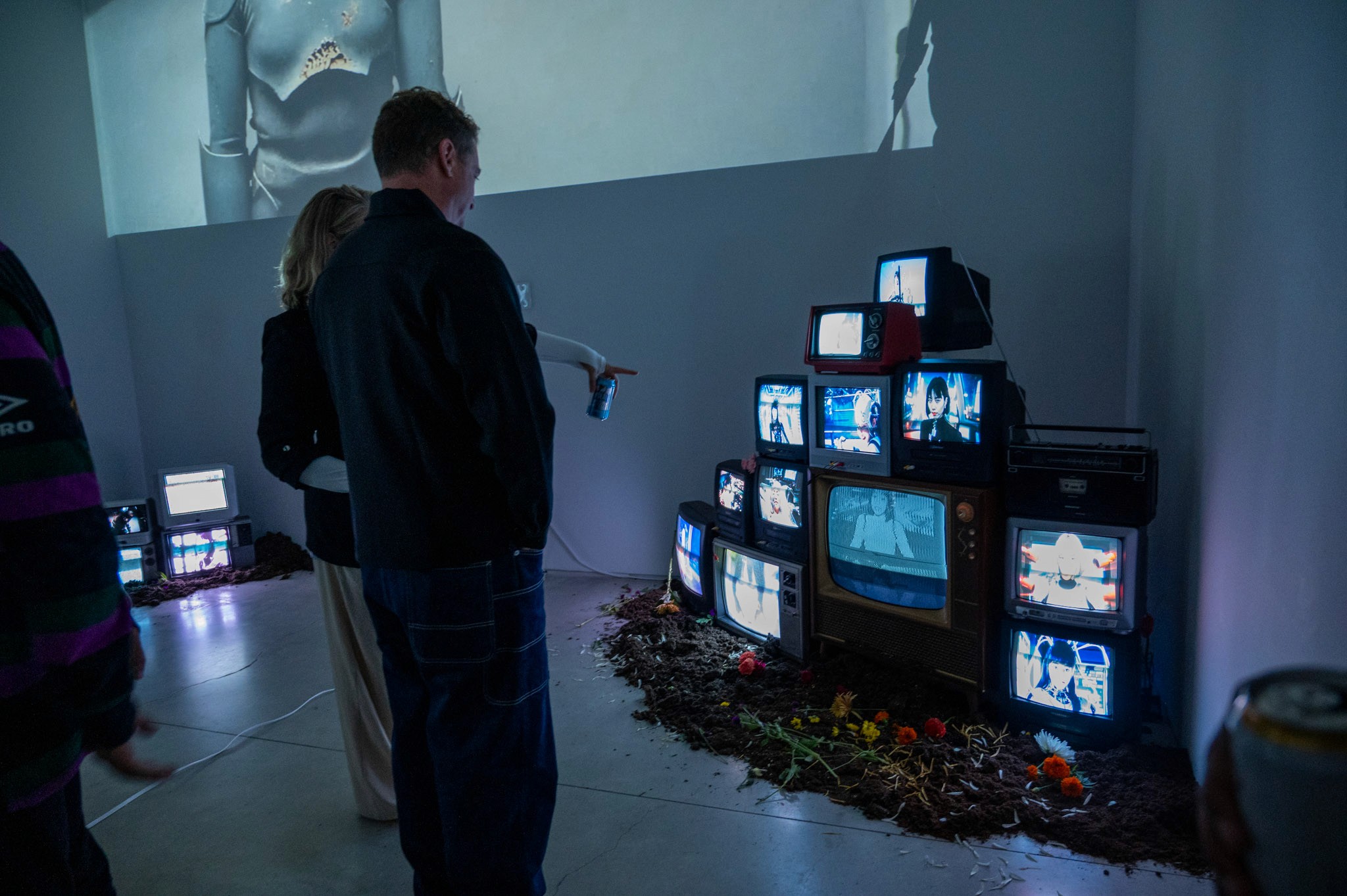
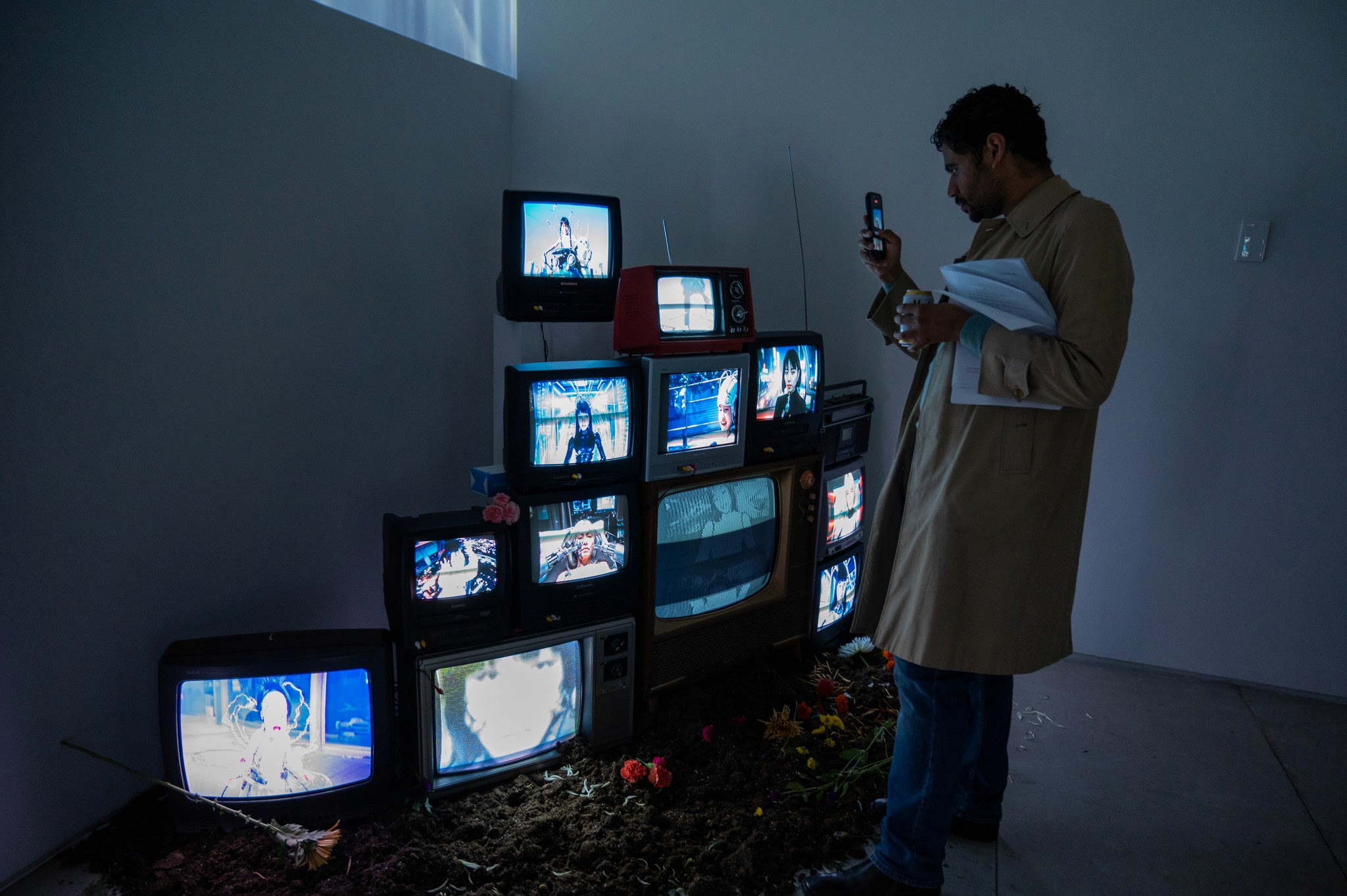
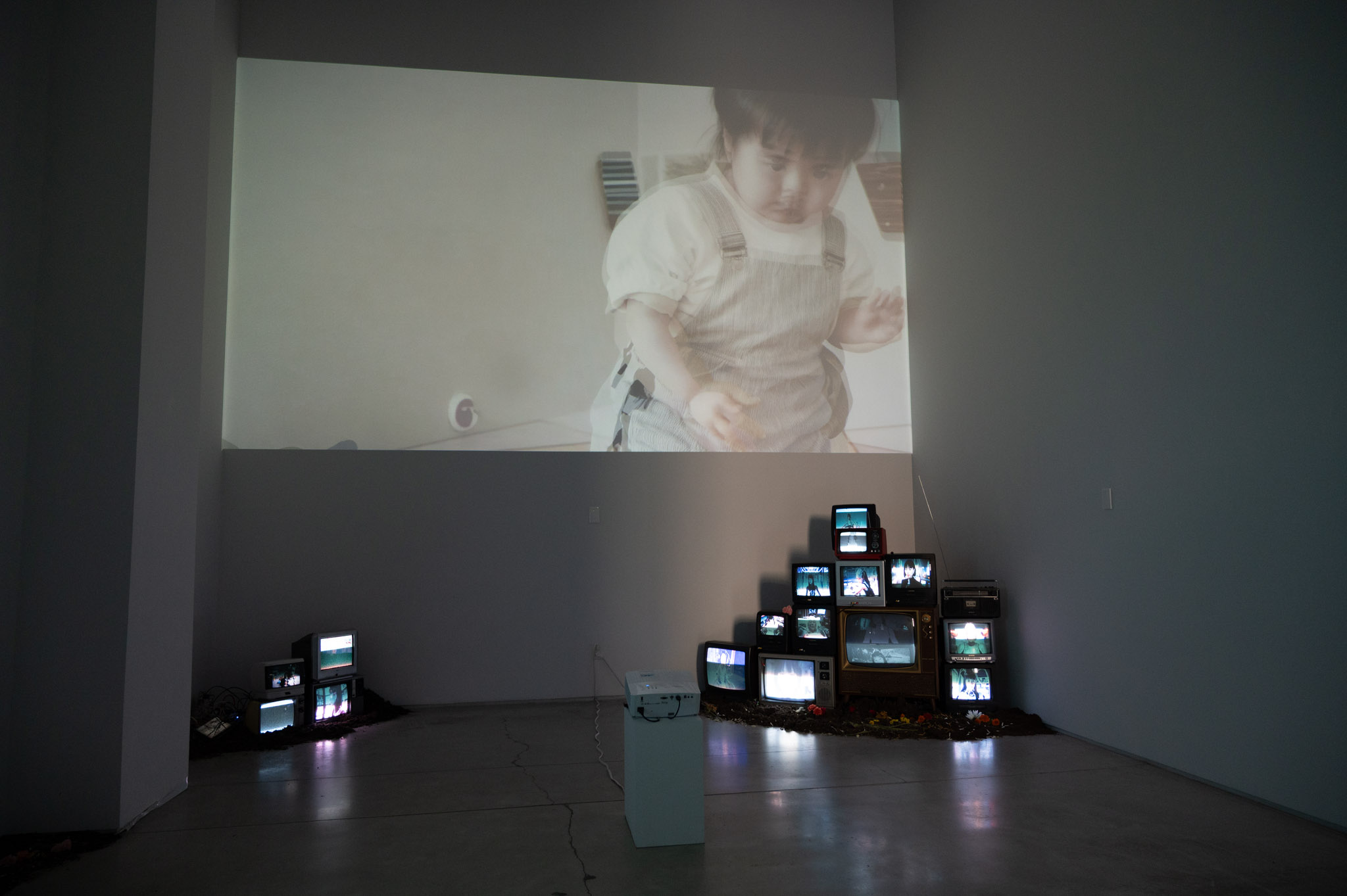
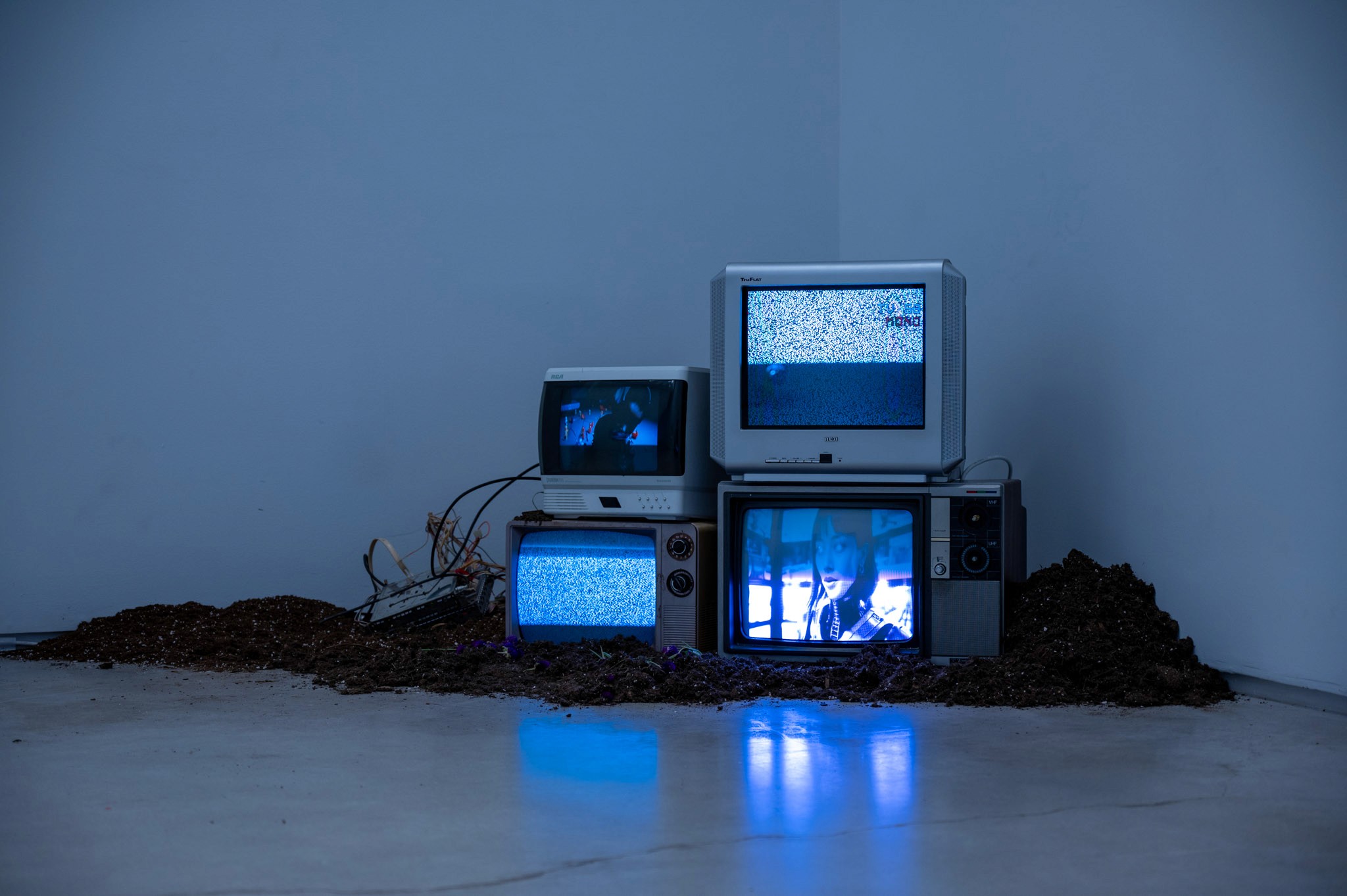
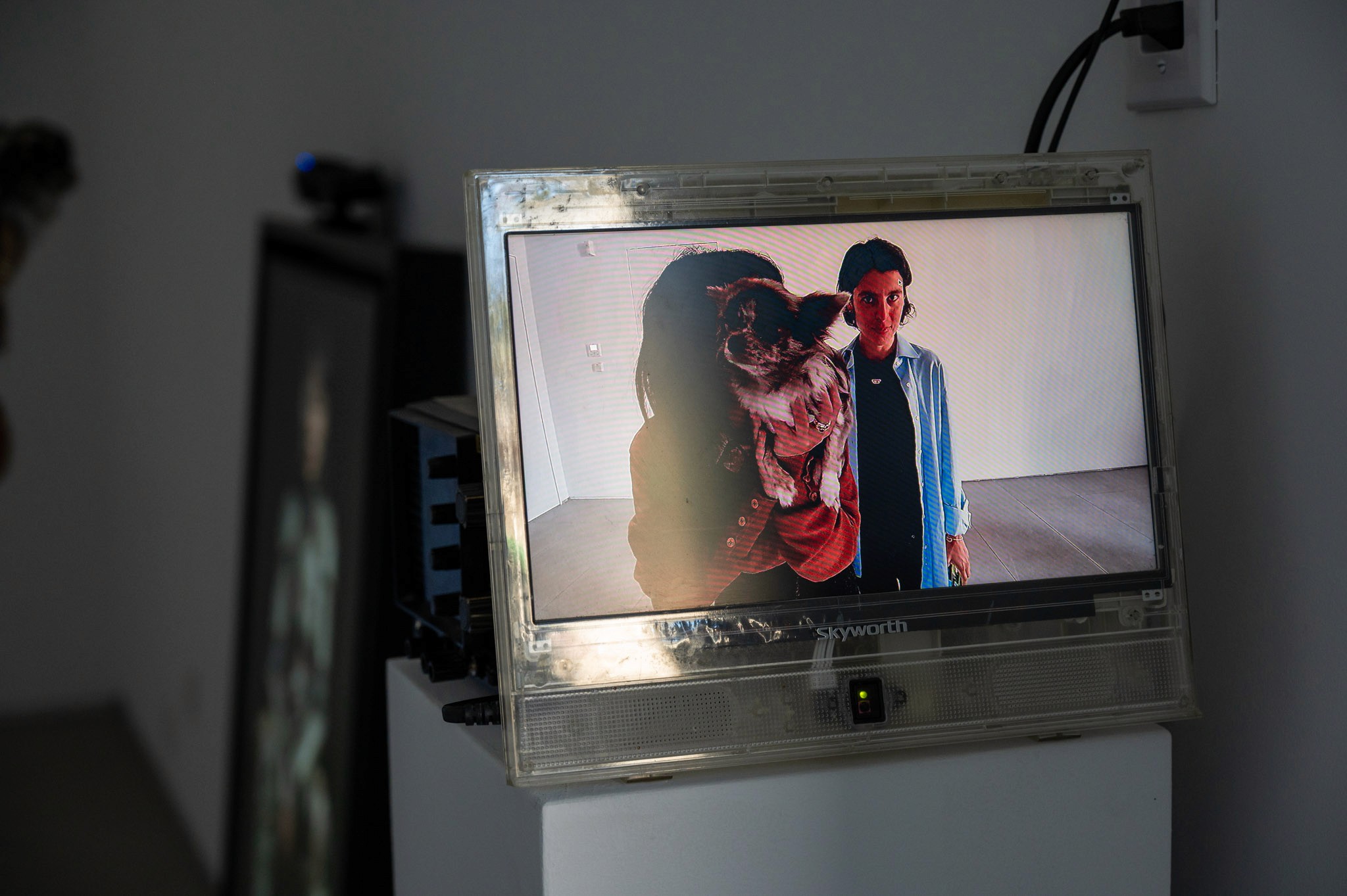
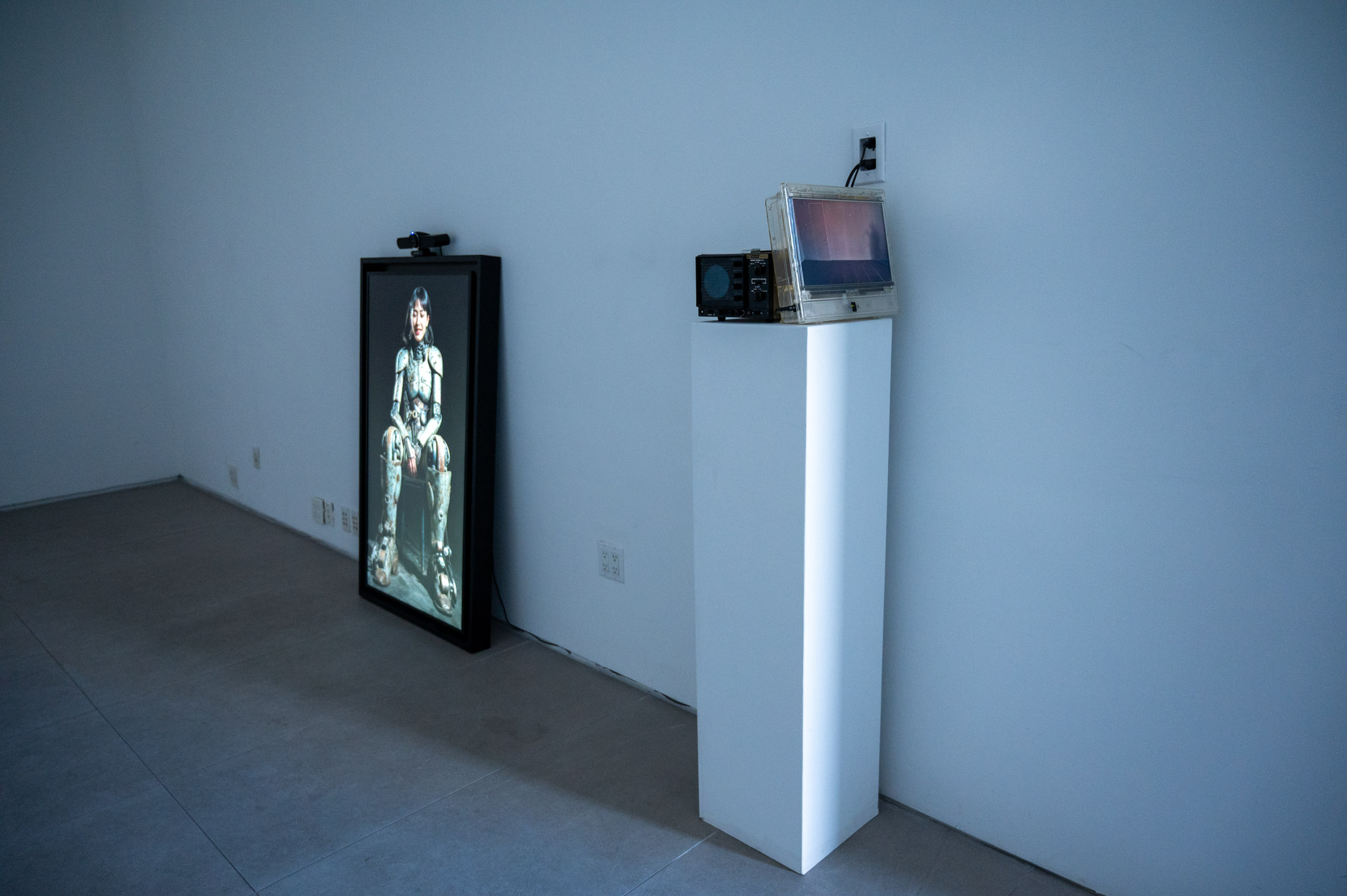
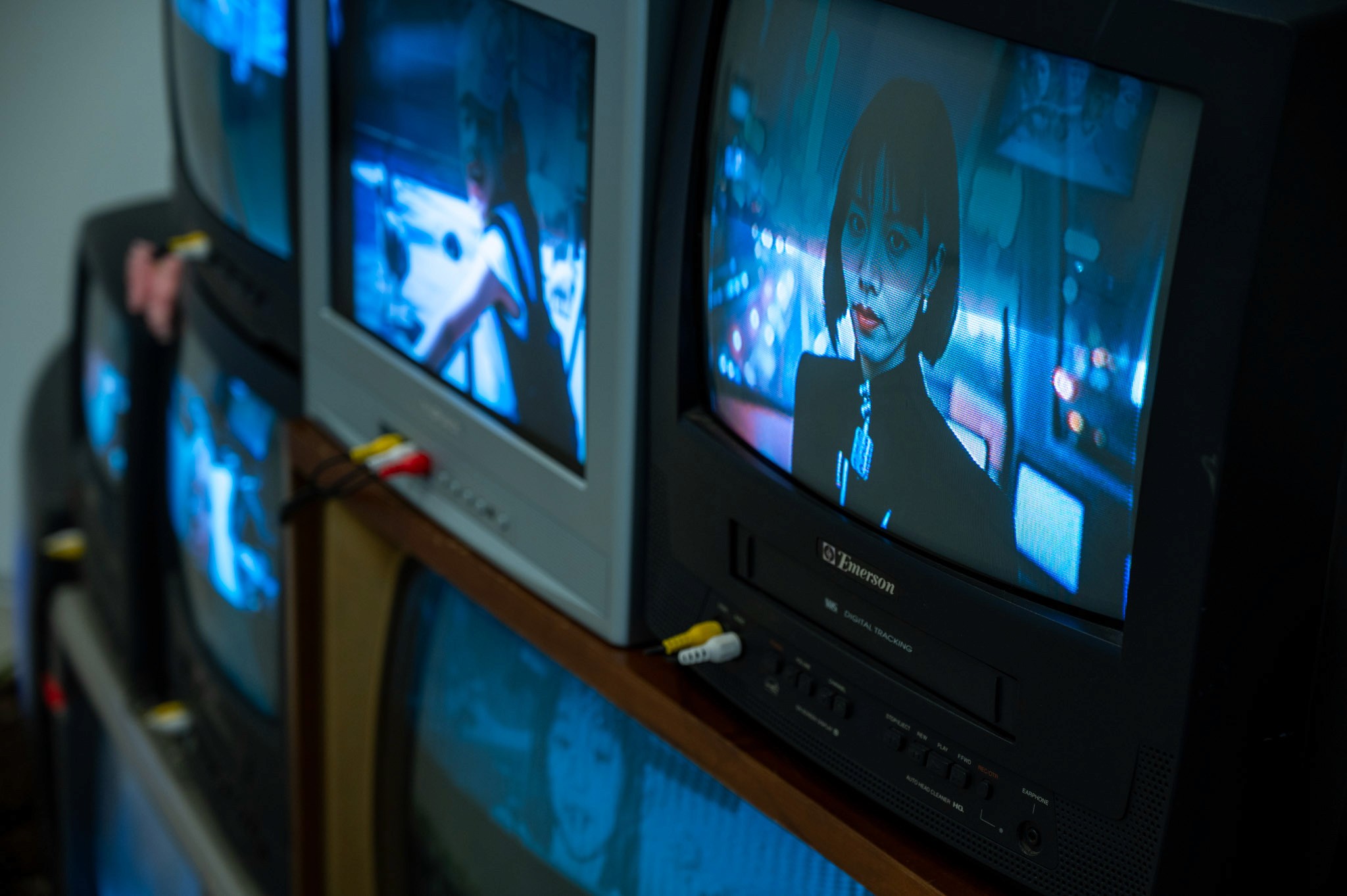
The exhibition unfolded as a physical environment. CRT screens, AI-generated portraits, and moments of self-dialogue turned the gallery into a space that blurred boundaries between body and mind, human and machine. Rather than explaining itself, the show was meant to be experienced as a quiet confrontation with how identity mutates once it becomes computational.
Offline was an experiment in presence, built as a SuperRare gallery.
What started as an extension of SuperRare became a real-world test of how digital art behaves when it leaves the feed and enters physical space. Offline was not about spectacle or scale. It was about attention, duration, and what stays with someone after they walk out the door.
The gallery sat at the intersection of on-chain culture and downtown New York. Crypto-native artists, collectors, curators, and people who had never touched an NFT all crossed paths in the same room. That crossover was intentional. Offline was meant to translate digital art culture without flattening it, and to see where friction or alignment naturally emerged.
Physical space changed everything. Digital work behaved differently when it was no longer scrollable. Screens became objects. Sound carried. Light mattered. People slowed down. Some works that felt loud online became quiet. Others finally made sense.
Beyond the exhibitions, we built something social. Offline became part of a downtown rhythm. Openings bled into conversations. People returned. Artists met each other in person for the first time. The space held a scene, even if briefly.
Curated by Mika Bar-On Nesher and Yohsuke Takahashi
We were also able to do the practical things that matter. We sold art. We placed work with collectors. We brought real press attention to digital artists without forcing the narrative. The gallery proved that on-chain art could operate seriously in a physical context without pretending to be something else.
The hardest lessons came from constraint. Installation limits, imperfect tech, timelines, budgets, and real-world logistics forced clarity. In a room, there is nowhere to hide. The work either holds attention or it does not.
Offline ultimately reshaped how I think about value. Conversations mattered more than metrics. Repeat visitors mattered more than foot traffic spikes. The gallery felt less like a destination and more like a temporary convergence point.
What I take forward is not the format, but the discipline. If digital art enters physical space, it should gain something it could not have online. Weight. Texture. Memory.
EGO in the Shell: Ghost Interrogation ran at the Offline Gallery in New York in October 2025. The exhibition looked at memory, identity, and surveillance through the lens of generative AI, drawing from Ghost in the Shell as a philosophical reference point rather than a visual one.
For the project, Emi Kusano trained an AI model on fragments of her own facial data and personal photographs, treating them as raw, impersonal material. The resulting images depict non-existent people. They function as anonymous selves that still carry the trace of the artist, raising questions about what remains when identity is abstracted into data.
The work connects Buddhist ideas of the self as transient with a contemporary reality where machines reproduce memory at scale. It asks what survives when personal history is reduced to code, and where authorship or selfhood begins to dissolve.
The exhibition unfolded as a physical environment. CRT screens, AI-generated portraits, and moments of self-dialogue turned the gallery into a space that blurred boundaries between body and mind, human and machine. Rather than explaining itself, the show was meant to be experienced as a quiet confrontation with how identity mutates once it becomes computational.